






Friday, March 1, 2013

CPOE Adoption Series - Part 10

Go-Live Planning and Support

Understandably, the issue of go-live planning and support weighs heavily on all involved in CPOE projects. And it is entirely reasonable to start thinking and discussing the topic well in advance of the actual event; for that reason, we deal with it relatively early on in the Clinical Leadership Preparedness Program (CLPP) and will do so here as well.

Go-live represents the “raising of the curtain” on the work product of all involved in the CPOE project. It is a “live performance” of the clinicians on stage and tests the adequacy of system design and build, completeness of clinical content build and the appropriateness and thoroughness of training given to all clinicians. The specter of less than acceptable patient care results—or perceived less than acceptable patient care results—and the threat of litigation are always lurking in the background and as such, CPOE go-lives can be expected to generate more than the usual level of angst, support requirements, and responsibilities. These attributes must be borne in mind when deciding on the go-live approach and planning for the event.

In general, go-lives are either of the “big-bang” or the phased (pilot) variety. The former represents the simultaneous movement to CPOE throughout the hospital by all users in all units, while the latter obviously accomplishes this transition gradually. Of note is the fact that big-bang does not necessarily mean simultaneous transition of all EMR applications (eMAR, Clinical Documentation, Physician Documentation, Bedside Medication Verification, etc.). Also of note is the fact that both of these approaches have been tried—yielding excellent, poor, and disastrous results. Each has advantages and disadvantages and the “secret” lies in the execution of the approach rather than in the choice per se. In addition, the presence of other applications “live” at the time of CPOE implementation, particularly clinical nursing documentation and eMAR, will enhance the chances for success.

Big Bang Approach
As mentioned, “big-bang” implies all doctors, all nursing units, all orders up at once. Advantages of such an approach include:
  • Avoidance of the risk of a “dual system”—paper and electronic—with some patients on CPOE, some not, or some orders in CPOE, some not
  • Avoidance of transfer of patients from “CPOE-live” units to “paper units”
  • Minimization of confusion among physicians with patients on multiple units (some paper, some electronic)—assuming all types of orders are electronic
  • Avoidance of dual processes for ancillary departments such as Lab, Pharmacy, and Radiology
  • Minimization of the time required to get all users up and running on the system
  • Definition of a clear transition point for all stakeholders and demonstration of the seriousness of the endeavor.

Disadvantages of the big-bang approach include:
  • Simultaneous change of everything
  • Requirement for more support personnel to provide hands-on assistance during go-live and completion of training of all staff within a short period of time
  • A larger number of issues to sort out in advance and to manage during roll-out
  • Smaller margin of error for insufficient support, design and build flaws and back-up plan
  • Patient safety impacts possible with significant bugs and flaws.

When should you consider big bang?  If your hospital:
  • Makes extensive use of hospitalists and/or intensivists
  • Makes—or will make—heavy use of institutional order sets
  • Is a small to medium-sized facility (<250 – 300 beds) and/or is upgrading or replacing its current CPOE system
  • Has:
    • Highly standardized processes for medication management
    • Many employed physicians responsible for inpatient care
    • Thoroughly analyzed workflow, training, support logistics, and testing requirements
    • A high level of clinical automation already in place: nursing documentation, eMAR, order management, medication management, etc.
    • A clinical staff with a high level of computer literacy and experience with clinical systems
    • A leadership team that is confident that the project team can get it all right the first time.

Phased (Pilot) Approach
The phased approach refers to the roll-out model for CPOE, not the entire EMR. Several methods for phasing exist: by unit, by service line, by physicians, and by various combinations of these. The common denominator is the restriction of the change from paper to CPOE to certain areas, practitioners, and therefore patients. Advantages of such an approach include allowing for:
  • Time to work out “kinks, bugs” and take corrective action
  • Maximum support for physicians on a unit-by-unit basis as “all hands” are on deck for each unit
  • Staggering of training for each go-live
  • “Lessons-learned” from design, build, and implementation in a step-wise fashion
  • Success to engender momentum
  • Some minimization of dual process issues with careful unit, specialty and/or physician grouping.

Disadvantages include:
  • Multiple systems (electronic, paper) with some units on CPOE, some not
  • Necessity for very close supervision of patient transfers
  • Significant possibility for error
  • Perpetuation of the fragmented data model
  • Possibility of significant inefficiency
  • Some physicians, services on CPOE, some not—patient care may be affected
    • Some orders “vetted” by Clinical Decision Support and alerts, some not
    • Orders fragmented with resultant potential for error
    • Ancillary departments must run dual systems until paper disappears completely

  • Potential for extreme delay in subsequent roll-out as “perfection” becomes the goal
  • Unending training, development, and testing cycle that can easily exhaust all available resources
  • Urgency and seriousness of the endeavor is diluted
  • Implementation team performs multiple roles for various stages of roll-out that are occurring simultaneously.

When should you consider a phased approach?  If your hospital:
  • Is a large facility (>300 beds)
  • Has a high number of community physicians who follow their patients in the hospital
  • Has a high number of physicians overall to train and support—particularly a large number of low admitters
  • Has limited clinical information system experience
  • Has staff with limited clinical information system experience
  • Cannot afford resources to implement house-wide at once.

In addition to these fundamental questions and decisions, many more issues—dealing with staff,
governance, training, support, back-filling, down time and printing policies, triage and command centers—are part of the go-live planning process. We deal with most of these in detail at the CLPP course. What we can say in the limited space available here is that it is never too early to start thinking about all of this, getting the appropriate education about the subject and accumulating the proper information about your institution. For as with everything else in CPOE, one size never fits all.

Click here if you missed one of the previous installments of Dr. Morgenstern's CPOE Adoption Strategies.

Friday, February 15, 2013

EHRs Could Harbor More Than Just Patient Information

A recent study from the New York Times sheds light on an emerging trend to mine healthcare data for medical research.

The study found that researchers could use EHR data to evaluate the outcomes and side effects of specific treatments, and also identify best practices and potential effective treatments, to help move medical discoveries away from “hunches” and actually measure if a hunch has “statistical merit.” The Times points out another potential benefit to mining EHR data is that it’s faster and less expensive than conducting traditional clinical trials.

There are some obvious concerns with this idea, the most significant one being patient privacy. Another potential issue with using EHR data in clinical trials is the possibility that diagnostic codes would be misinterpreted, counted more than once, or not at all! In my opinion, there may be several concerns that at times, may outweigh the benefits.

It would be more useful, and subject to less criticism and scrutiny, to use EHR data for other endeavors such as population surveillance and identifying best practices in care and possibly to target intervention to high risk segments of the population. We could use the data gleaned from certain geographic locations to help detect, for instance, the true number of diabetics in a given population by analyzing the diagnostic codes, lab tests, and prescriptions written for diabetes-related problems. We could not only identify more accurate disease prevalence rates in a population, but also preventative measures to combat these trends.

What do you think? Is mining EHR data for medical research ethical?

Friday, January 4, 2013

New Bill Proposed to Increase Funding for Telehealth Services

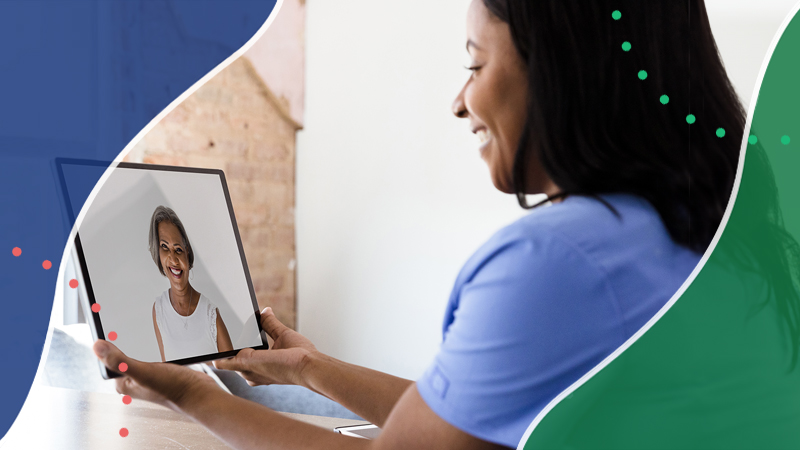
More and more physicians are using telemedicine to keep their patients healthy, and it could become even more popular if this proposed bill in the U.S. House of Representatives gets passed.

The Telehealth Promotion Act of 2012, which has garnered the support of The American Telemedicine Association, would expand telehealth services in both Medicare and Medicaid programs by increasing payments for telehealth services. This proposed legislation would not only eliminate coverage restrictions to telemedicine, it would also provide a new federal standard to medical licensure to allow providers to treat eligible patients anywhere in the nation.

Friday, December 21, 2012

KevinMD’s Tips to Build Your Social Media Presence

Last month, Kevin Pho, MD, the leading physician voice in social media known as KevinMD, delivered the keynote address at our 2012 Physician Forum. During his speech, Dr. Pho shared how he built his online presence, which started back in 2004 when he wrote a quick blog post to warn patients about the recall of Vioxx, a popular arthritis medication. Eight years later, KevinMD is considered a top social media influencer in healthcare and medicine, and was even hailed as a “must-read blog” by Forbes.

Looking to start your own social media presence? Here are Dr. Pho’s six tips for building an effective and professional online profile:
   
  1. HIPAA Comes First - Do not post, tweet, record, or blog about anything that violates HIPAA standards. Everything you post online should be perfectly acceptable to say in a crowded elevator.
  2. Google Yourself Once a Week - Frequent searches ensure that you know what information is available about you online, good or bad. Knowing is half the battle!
  3. Create a LinkedIn Profile - LinkedIn is a professional network that allows you total control over the content. LinkedIn profiles are always among the top results in Google searches, so patients will be sure to see them.
  4. Embrace Your Reviews - 44% of patients go online to read reviews of physicians. Make a point to read all your reviews—positive, negative, or in-between—a lot can be learned from them. But don’t worry too much—almost 88% of physician reviews are positive.
  5. Professional vs. Personal - If you like maintaining a Facebook page, consider having two—one for your personal life and an entirely separate one for your professional life. Patients shouldn’t see pictures of you on the beach or the ski slope; keep them focused on healthcare.
  6. Let Patients Come To You - If patients want to connect with you via social media, that’s a wonderful thing! However, don’t be the first one to reach out. It’s their move to make, not yours.