






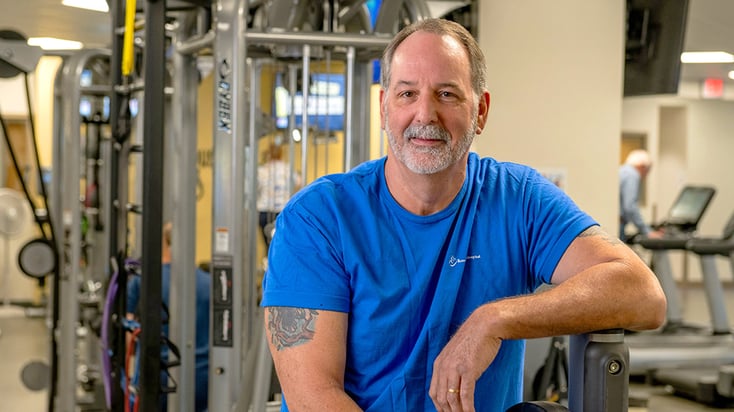
Our venture into wellness began with a prescription. Five years ago, one of our cardiologists wrote his patient a “prescription” to use our fitness complex to improve their cardiovascular health. Patients often expect their providers to prescribe a medication, which helps manage symptoms, whereas this direction got to the root. Our CEO recognized the potential of that concept, and the Prescription for Your Health (P4YH) program emerged from that idea.
Located in West Virginia, which is ranked the unhealthiest state in the US, Roane General Hospital had already shifted our focus to preventative care and disease management to address the root cause. Our service area challenges include high rates of diabetes, cardiovascular disease, and numerous social determinants of health. Introducing P4YH to the community further strengthened our initiative.
The Prescription for Your Health program is a multi-layered approach to adopting healthier lifestyle behaviors to improve outcomes at no cost to the participant. By offering a free wellness program designed to each individual’s needs, we created incentives for our community to better manage their health.
As of March 2026, P4YH has 585 active participants with nearly 45% age 55 or older — in other words, the population at increased risk for metabolic and cardiovascular disease. The program concentrates on three core pillars essential to improved health outcomes.
Medical Management
Once enrolled in the program, whether by their primary care physician referral or voluntarily, participants work with their provider to create a medical plan of care. The free overall benefits of the program are an incentive to create a relationship with a primary care physician, as that’s vital for long-term wellness. The intake assessment includes compiling medical history, completing preventative screening, arranging labs, and gathering biometrics.
Instead of relying on calculated tests like BMI, we utilize technology to gather precise biometrics. Each participant completes body composition scans to measure visceral fat, skeletal muscle mass, and percent body fat. A ReeVue expirometer device measures a person’s oxygen consumption and carbon dioxide production, which is then calculated into resting metabolic rate. That rate reveals an accurate caloric range specific to the individual.
Our intake assessment also focuses on metabolic syndrome, or a group of conditions that increase the risk of heart disease, stroke, and type 2 diabetes, as a health measurement. The five conditions include high blood pressure, high blood sugar, too much fat around the waist, high triglycerides, and low HDL cholesterol. A person with three or more confirmed conditions is diagnosed with metabolic syndrome. Effective last October, our providers started screening primary care patients for metabolic syndrome. If they have 3 of the 5 indicators, we refer the patient to P4YH.
|
Patient Success Story The participant: Yvonne is 70 years old with high cholesterol, high blood pressure, and recovering from a quadruple bypass. Raising her young granddaughter, she wanted to build healthier habits to improve her health and pass it along to the next generation. The program outlined healthier food choices and how to stay active inside and outside of the gym. The impact: Staying active helped Yvonne improve balance and stability, an important way to stay independent. She decreased body fat percentage by 8.7%, increased skeletal mass by 2.4 pounds, reduced A1C by 1.7%, and reduced the number of medications needed to manage her health. Yvonne reports an improved quality of life and more energy to keep up with her granddaughter. |
Health Education
Every participant works with a health coach to design their wellness vision, which includes short- and long-term goals. The coaches aid accountability and guide participants to the other divisions of the program. As a part of P4YH, our Food is Medicine 12-week course teaches the principles of nutrition. A certified nutrition coach reviews how calories are burned and the benefits of micronutrients, plus helps set healthier diet goals. Participants are given fresh food, recipes, and an app that helps with diet plans, grocery lists, and tracking caloric intake.
Common social determinants of health in our community include challenges such as access to food and transportation. Roane County contains a mixture of “food deserts” and “food swamps.” The availability of food is present in some areas, but it’s often not the healthiest option, which constitutes a food swamp. In other areas, food availability is scarce and considered a food desert. Our free education classes include how to eat healthy on a budget and information on WVU’s FARMacy program, where free weekly bags of fruits and vegetables from farmers' markets are given to food-insecure patients with chronic diseases.
For participants with complex medical disease states, we call on our certified dietitians. Diabetes, for instance, is prevalent in our service area. Our registered pharmacist, who’s also a certified diabetic educator, provides classes and one-on-one sessions for complex histories. Additionally, participants who use tobacco products are required to undergo screening and education with respiratory therapy staff who are certified tobacco educators.
Medical Fitness
This pillar encompasses the most popular incentive of our program: free membership to our fitness center. In 2021, a $26 million expansion and renovation of our facilities included a new Center for Health and Wellness, which incorporated a full-service fitness center with machines, rooms for therapy and rehab, and a pool.
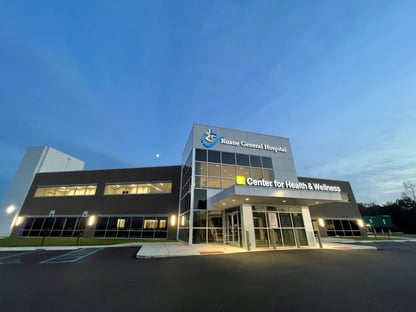
The Center for Health and Wellness staff are certified personal trainers who work with participants to design a medical fitness plan according to their unique metrics. As many are new to an exercise routine, the trainers supervise workouts to teach participants how to safely use gym equipment. The staff also teaches fitness education courses and leads group classes. Ideal for older participants, the pool allows for an aquatics program designed to focus on hip and joint health. Fitness center attendance is a marker tracked in MEDITECH Expanse and goes toward their progress.
To support our wellness initiative and all it includes, the center also houses a healthy way cafe where staff and visitors can purchase healthy, low-cost items.
Partnership with WVU
At each stage of the program, our physicians and coaches track a participant's metrics in MEDITECH Expanse. Leveraging the platform’s robust customization, we’re able to enter data as if it's a clinical event and document encounters. For participants utilizing personal fitness devices, we integrate the collected data into the EHR, and patients can use them to complete P4YH challenges. For participants who do not have a device, we provide pedometers free of charge. On a patient-by-patient basis, our database is essential to tracking progress as providers conduct quarterly reassessments and present the findings to participants. To get a broader look, we’ve also partnered with West Virginia University’s School of Public Health.
The WVU School of Health abstracts our data and validates its accuracy and impact on the community with scientific peer review. We closely monitor trends such as how we’re impacting metabolic syndrome in the community and certain cohorts relevant to our specific service area, including diabetes. Reports measuring clinical outcomes observed participants with paired measurements, or a baseline and the most recent follow-up measurement. Participants engaged with the program for an average duration of 10.1 months, and 25% of participants remained engaged in the program for more than a year.
|
Patient Success Story The participant: Brandon was referred to P4YH by his physician after a hospitalization caused by internal bleeding and critically low hemoglobin. At nearly 450 pounds, a change was needed to rebuild his health. The program introduced him to healthier food choices on a budget, how to use the gym equipment, and how to keep a routine. The impact: By staying committed to improving his health, Brandon has lost 127 pounds. His strength, endurance, and mobility have shown improvement, and he continues working towards his goal of weighing under 300 pounds. His HDL cholesterol has increased, and his hemoglobin A1C is within normal limits. |
According to the report released in March 2026, 55.4% of active participants with diabetes improved their HbA1c levels, and the mean HbA1c declined from 6.70% to 6.45%. Among participants meeting criteria for metabolic syndrome, mean waist circumference decreased from 45.05 inches to 44.57 inches, or a significant average reduction of nearly half an inch. In that same cohort, diastolic blood pressure declined from 79.89 mmHg to 75.71 mmHg, an average reduction of 4.18 mmHg.
What's next for P4YH
Now five years into the program and with a steady foundation, Roane General Hospital is looking towards the challenge of generational chronic disease and sustainable health behaviors. We received a mini-grant from Try This West Virginia to host a 4-week Food is Medicine course this summer with the local youth organization, PATCH. Promoting our program could lead to more balanced enrollment among the generations. Currently, only 17.6% of participants are aged 18–34, and just 8.7% are under age 18.
Disease prevention manifests in many ways, whether it’s through teaching healthy behaviors to our youth or conducting routine screenings for all ages, and we’re dedicated to paving the way to a healthier future in West Virginia.
Rural healthcare organizations face intense financial pressure. In this ebook, learn more about these challenges and MEDITECH's commitment to helping organizations remain independent and community-owned, avoiding forced mergers and consolidations.