






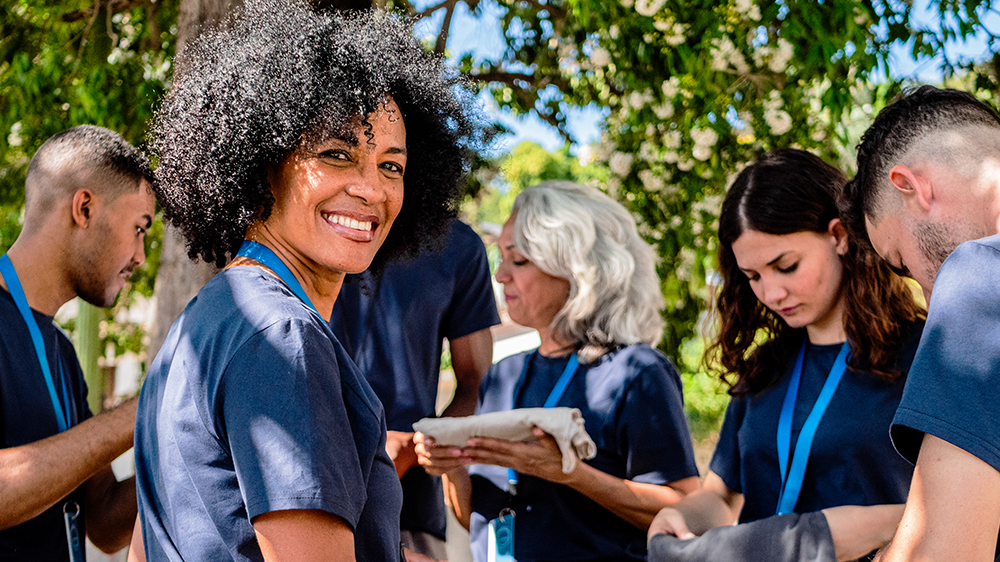
 This week, over 5,000 hospitals across the US are celebrating National Hospital Week, which recognizes the extraordinary contributions healthcare workers make to their local communities. These hospitals are the ones residents often turn to in their most vulnerable moments, a need that is especially important for those supporting rural or underserved areas. They are also among the first to help identify and address not only physical health challenges, but mental, social, and economic ones as well.
Our customers continue to inspire us through the many innovative ways they are connecting with their communities to support those in need. Their motivational stories tug at our heartstrings even as financial and regulatory pressures tug at their purse strings.
This National Hospital Week, we celebrate all our customers and share a few inspiring stories of those who have gone above and beyond to provide extraordinary care.
St. Mary’s Healthcare (Amsterdam, NY)
“We are the lifeline,” explains Julie Demaree, Vice President, Chief Technology Officer, and Digital Innovation Officer at St. Mary’s, in a recent interview with Chief Healthcare Executive. Demaree shares the mission of several rural health organizations looking to support poor and vulnerable populations across rural America. She highlights the support her health system provides to these patients, from offering food in every doctor’s office to providing clothes and diapers for pregnant moms and their babies through a program called “Annie’s Closet.” The organization screens all patients for social determinants of health, recognizing that when families struggle to pay for food and clothing, medications are often the first to be cut. St. Mary’s is also establishing telehealth services with local schools to ensure children have access to primary care doctors and is working with a pharmacy to deliver medication to schools as needed.
Beauregard Health System (DeRidder, LA)
Beauregard Health System is committed to ensuring residents across its rural community always have access to advanced care close to home, sparing them the logistical and financial burdens of traveling to larger cities. Its hospital and 10 freestanding clinics — four of which are accredited rural health clinics — provide advanced technology to ensure consistent clinical excellence across all care settings. To mitigate human error and improve clinical outcomes, they launched an innovative sepsis protocol using a rapid diagnostic blood test and hardwired alerts within Expanse to diagnose and treat septic patients quickly. They also offer a robust telehealth solution that enables local physicians to consult with remote neurologists via video to determine the patient's disposition and care needs.
To support their patient population, the health system employs a dedicated patient and community engagement coordinator to actively manage preventative care and chronic conditions. Beauregard uses technology to identify care gaps and a secure texting platform to send appointment reminders and prompt patients to schedule important preventative visits, such as Medicare annual wellness checks.
Hear more about Beauregard Health System’s advanced use of technology in a Becker’s podcast with CEO Traci Thiodeaux.
Augusta Health (Fishersville, VA)
Located in the heart of the Shenandoah Valley, Augusta Health operates under its philosophy, "of the community for the community by the community." In a recent interview with This Week Health, VP and CIO Leigh Williams discusses how, by maintaining their independence and actively engaging with and listening to their community, the 255-bed independent community hospital can better support the needs of its local population. Conducting comprehensive community health needs assessments every three years helps to drive their clinical strategy and empowers them to implement several key, community-driven initiatives.
According to its CHNA, 21% of Augusta’s community qualifies as food insecure. To support these needs, they launched a farm-to-institution project that grows and harvests produce for community outreach programs and the hospital food system. The Augusta Food Pantry also ensures equitable access to nutritious food for patients with chronic disease who screen positive for food insecurity. Additionally, Augusta Health works with its foundation to fund mobile pop-up clinics, sending an RV to locations where they are most needed, such as churches, community centers, and homeless shelters.
Listen to the interview with This Week Health and read Leigh Williams’ blog.
Roane General Hospital (Spencer, WV)
Located in a state ranked among the unhealthiest in the nation, Roane General Hospital implemented a Prescription for Your Health program focused on preventive care and disease management to address several high-risk factors in the community, including diabetes, cardiovascular disease, and numerous social determinants of health. The free wellness program incentivizes more than 585 active participants to better manage their health by creating a trusting relationship with a primary care physician to support long-term wellness. Every participant works with a health coach to design their wellness vision, including participation in a 12-week Food is Medicine course that teaches nutrition principles. The program also features free membership to their full-service fitness center and monitoring of participants through personal fitness devices integrated into their MEDITECH Expanse EHR. Participants who cannot afford devices are provided with pedometers at no cost.
Additionally, as Roane General’s community includes both food deserts (food scarcity) and food swamps (unhealthy options), the health system offers free educational classes on how to eat healthy on a budget. They also supply participants with information about WVU’s FARMacy program, which provides free weekly bags of fruits and vegetables from farmers' markets to food-insecure patients with chronic diseases.
Read their recent blog for more information on Roane General’s Prescription for Your Health program
Boone County Hospital (Boone, IA)
Recognizing a growing population of women seeking home births and statewide shortages of labor and delivery services, Boone County collaborated with local home-birth providers and midwives to lend its support and expertise. Boone County discussed expectations with home birth transfers, reviewed their level of care, and determined which patients could safely be cared for at a level 1 low-risk obstetrics service. They also made it a priority to address the stigma around home births and ensure patients’ voices are always heard.
The health system also joined the “Step Up Together” collaborative to review and improve safe transfer processes, including home-to-hospital and hospital-to-home transfers, through webinars, simulations, and discussions with home birth providers throughout the community. By running simulations, they ensure that labor and delivery nurses and providers have hands-on experience and practical training for emergencies.
Read more about Boone’s collaboration with patients and midwives in their blog.
These stories only scratch the surface of the innovative, life-changing care and community support our customers provide, reflecting their deep compassion and resilience.
Discover the impact of MEDITECH Expanse on health systems of all shapes and sizes.