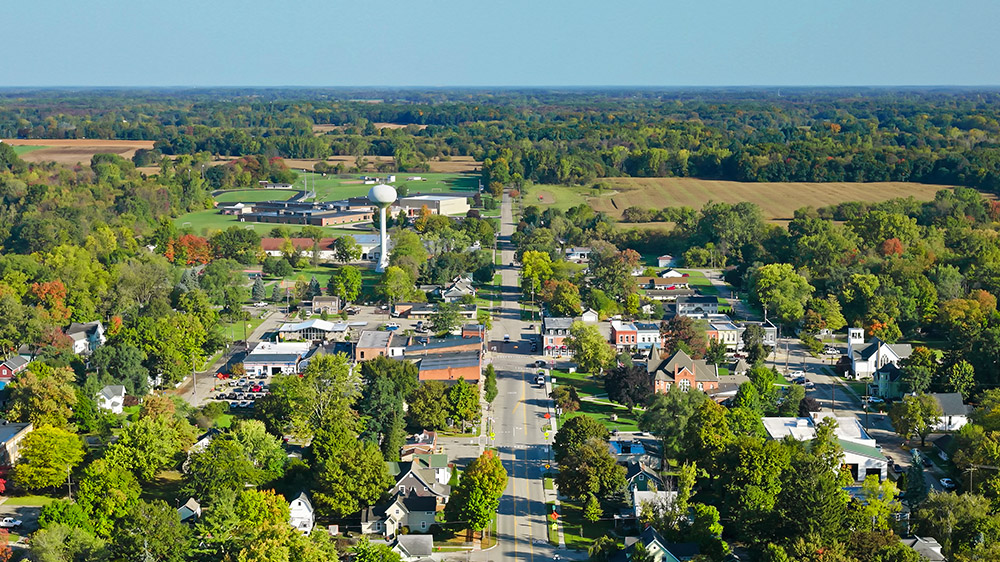
Rural healthcare organizations are an essential part of the national healthcare system. They also face myriad complexities and challenges: financial instability and closures, workforce shortages, geographic and access barriers, shifting patient demographics, and many others. As a result, these organizations are looking to leverage new federal initiatives like the Centers for Medicare & Medicaid Services (CMS) $50 billion Rural Health Transformation Program (RHTP).
To help rural healthcare leaders chart a course forward, MEDITECH Associate Vice President Janet Desroche collaborated with Health Data Management on an insightful three-part series in which she unpacks exactly what rural providers must do before, during, and after they receive transformation funding to ensure these investments create lasting, meaningful change for their communities.
Read on to learn more about how rural healthcare organizations can successfully navigate the changing landscape of transformation funding.
Rural Health Transformation Starts with Understanding the Map
In the first article of her series, Desroche highlights a critical reality of the $50 billion RHTP: it is not a single, standardized national grant program. While the federal government established the overarching framework, the funding was allocated to all 50 states to implement in their own ways. That means rural hospitals and clinics are operating in 50 entirely different environments. To succeed, Desroche advises leaders stop looking solely at federal guidelines and start examining their state’s specific playbook.
Key takeaways include:
- Study your state’s promises. Every state submitted an approved plan to CMS. Rural organizations need to understand what their state prioritized, how the funding will reach local providers, and what specific outcomes the state is required to report back to the federal government.
- Be present in the conversation. Rural leaders must dedicate time to monitor state programs, engage with hospital associations, and communicate with legislators. If rural providers aren't at the table, other entities will make decisions for them without the benefit of local context.
- Lead with strengths. Rural healthcare faces real shortages, but funding strategies shouldn't focus entirely on deficits. Leaders should position their existing strong programs — whether, for example, in addiction treatment, maternal care, deep community partnerships, or other areas — as regional assets to build upon.
Before Rural Providers Buy New Tools, They Should Audit the EHR They Already Have
When substantial funding enters the healthcare space, it's tempting to immediately purchase new software or platforms. In part two, Desroche warns against buying new tools before fully understanding the capabilities of the infrastructure your organization already owns. The electronic health record (EHR) can often provide much of the operational backbone needed for transformation.
Key takeaways include:
- Start with community, not technology. Don't start with an EHR feature inventory. Start with a Community Health Needs Assessment (CHNA) to identify the specific clinical and operational problems you need to solve — such as chronic disease burden or behavioral health needs — and let that assessment drive technology decisions.
- Translate goals into care pathways. An EHR is most valuable when its functions are connected into a repeatable workflow. Once a priority is chosen (e.g., suicide prevention), existing EHR tools like screening templates, alerts, patient registries, and referral workflows can help create reliable, step-by-step care pathways.
- Design backward from the measures. CMS requires states to report quarterly and annually on progress, so leaders need to avoid building a program without asking how to measure the results. IT, clinical, and operational teams need to be brought together with your EHR partner to ensure your current system can capture the data elements you need for state reporting.
Why Rural Transformation Funding Will Not Create Sustainable Capacity by Itself
In the final installment of her series, Desroche shifts the focus to the operational reality of grant implementation. A funded idea is not the same as a sustainable program, and technology alone won’t transform care without a human engine behind it.
If transformation projects are simply piled onto the plates of already overextended staff, they are destined to stall out or never be fully implemented.
Key takeaways include:
- Fund the people doing the work. Lots of staff are involved in the implementation of new care models and technologies: project managers, IT support, clinical leaders, care coordinators, and more. The labor required to configure systems, track metrics, and train staff must be explicitly identified and funded in the grant proposal. Do not assume existing staff can simply absorb these duties.
- Make accountability visible. For cross-departmental or regional initiatives to work, someone needs to own the end result. Organizations must establish clear executive accountability, day-to-day project ownership, and pathways for resolving operational failures.
- Design for the day after funding ends. What happens when the grant money runs out? Sustainability must be baked into the design from day one. Whether an initiative becomes self-sustaining through new reimbursements, shared regional expenses, or reduced utilization costs, leaders must understand the long-term total cost of ownership before they begin.
The RHTP is laying a path to reshape rural healthcare delivery, but it’s not a simple one. These articles help illustrate why true transformation requires a deep understanding of state-level strategy, a willingness to maximize the technology you already own, and a commitment to funding the human workforce necessary to sustain programs long after the grant cycles close.
By planning carefully and building upon existing community strengths, rural healthcare leaders can turn temporary funding into permanent, sustainable capacity.
Learn more about how MEDITECH works for rural healthcare organizations in our eBook.